In this post
New Albany doesn't slow down
New Albany, Ohio has become one of the Midwest's biggest data center markets in a very short space of time. Meta, Google, Microsoft, Amazon and Vantage are all building here, and AI demand is pushing new capacity onto the schedule faster than anyone planned for. Power is the constraint everyone talks about — grid connections are slipping and more campuses are turning to on-site generation to stay on programme.
What gets discussed less is what has to happen between the buildings. Campuses this size need interbuilding fiber at counts that would have been unheard of a few years ago, and installing it is not a routine pull.
Alongside Plumettaz America Corp, Thayer Power & Communication and Sumitomo Electric, we ran a demonstration to prove out one of the hardest versions of that job: 2,600 feet of 6,912-fiber cable, blown rather than pulled.
Why we blew it instead of pulling it
Pull a cable and all the tension lands on the lead end. On a cable this size and weight, that's a real risk — you're one snag away from microbends or damage that won't show up until you test.
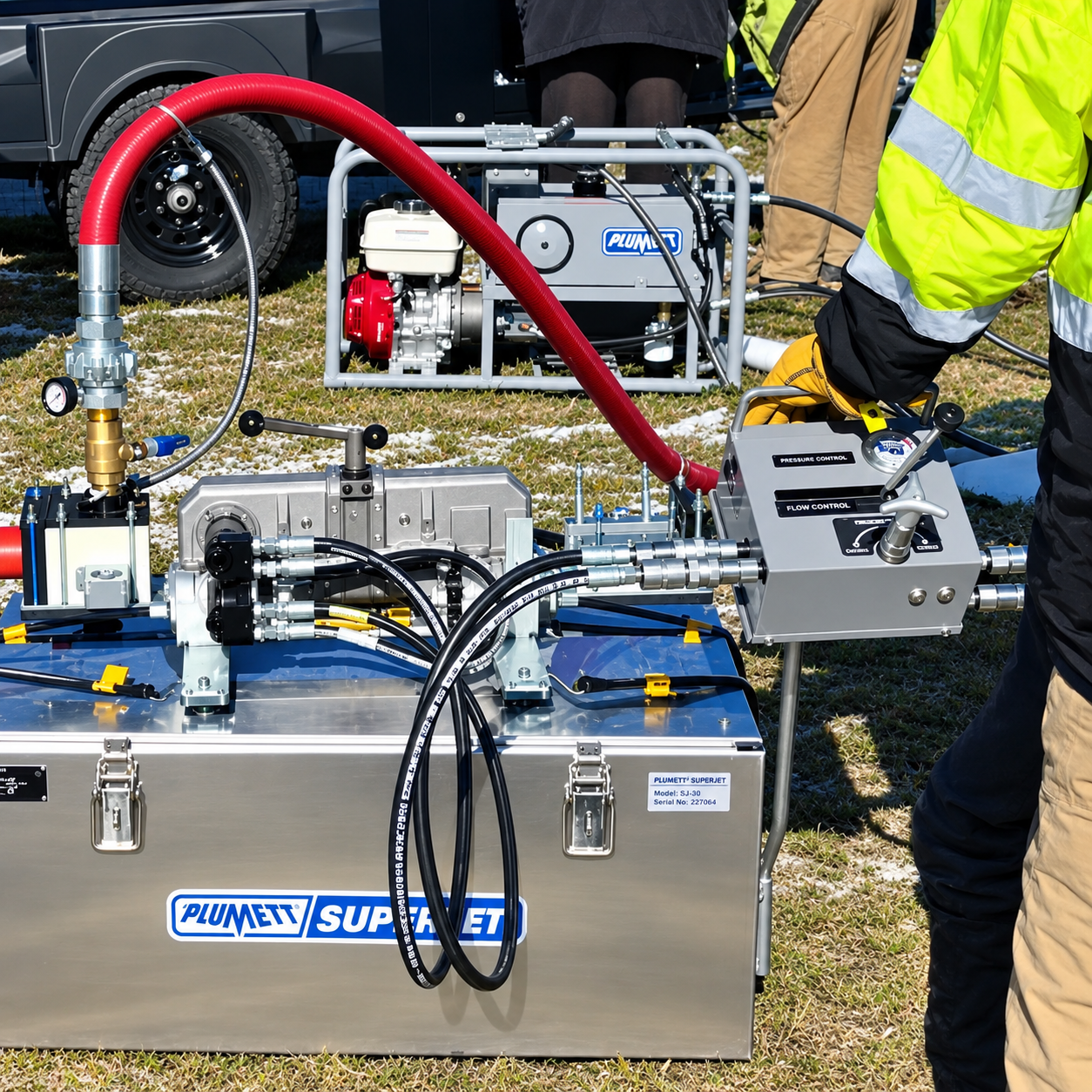
Air blowing takes that risk out. Compressed air and a gentle mechanical push move the cable through the innerduct, so it effectively floats on a cushion of air and lubricant instead of being dragged. Tension stays low from end to end. The Plumettaz blower ran smoothly for the full 2,600 feet, which is why this method has become the default on hyperscale installs rather than the exception.
Having it on the ground already
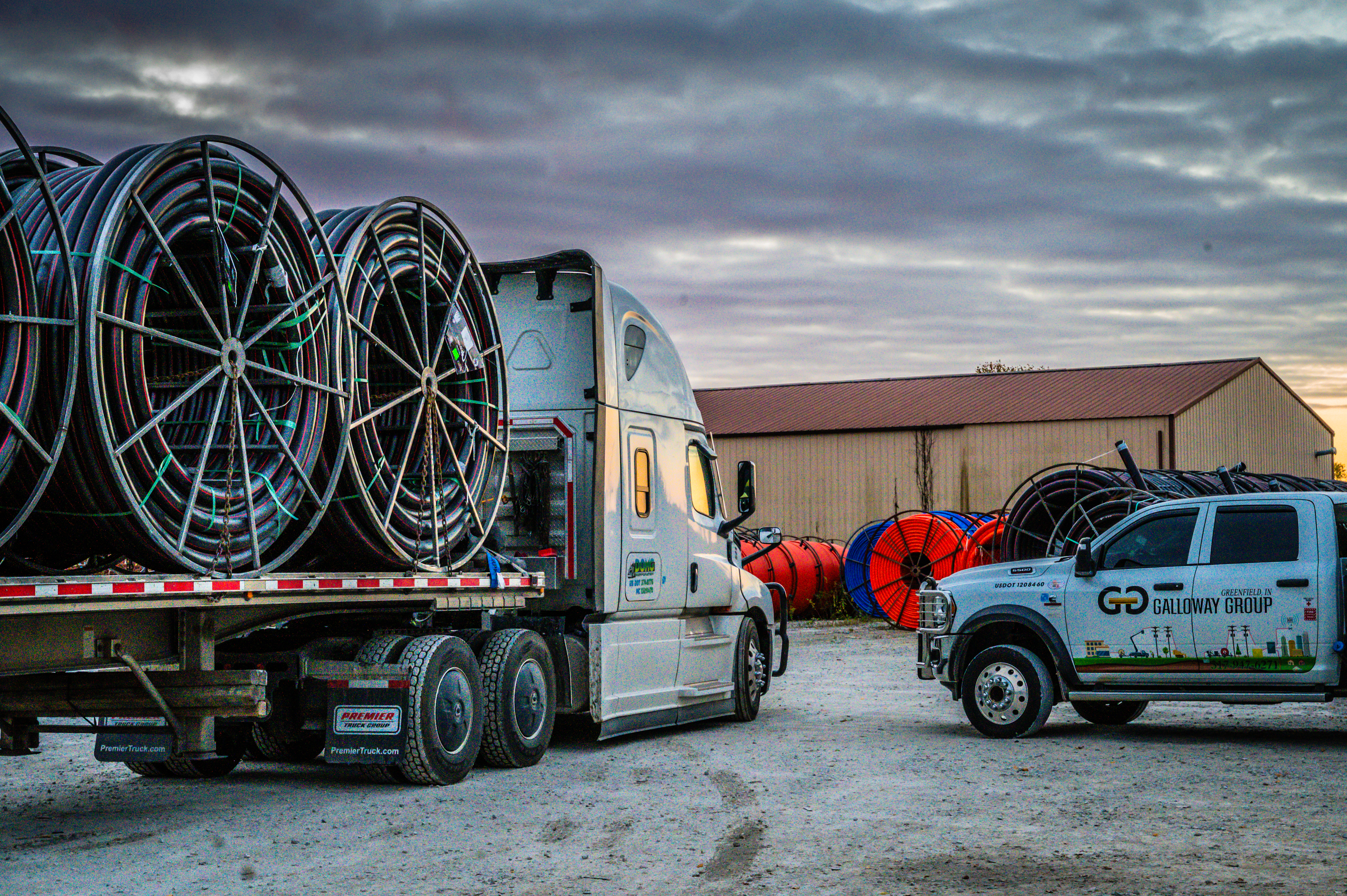
Our yard in the Columbus area is one of the reasons we could support this. High-count fiber, innerduct and the supporting hardware were already stocked locally, so nothing on this job was waiting on a delivery date from somewhere else.
That's the part that matters when a campus is racing a commissioning date. Material that's already in the region is material that can be on site the same day.
6,912 fibers, 576 ribbons
A cable this dense creates an obvious question: how do you terminate it?
The answer is Sumitomo's Freeform Ribbon™ construction. The 6,912 fibers come organised into 8 groups of 864, and within those, 576 twelve-fiber ribbons. With mass fusion splicing, a crew splices 12 fibers at once — roughly 15 to 30 seconds per ribbon.
That turns a job that sounds impossible into a multi-day process for a skilled crew. As fiber counts keep climbing across the industry, that capability stops being a nice-to-have.
Why operators build in redundancy
Cables get hit. A backhoe strike on a cable this size means excavation, replacement cable, mass splicing and full testing — realistically $15,000 to $30,000 and often more.
Hyperscale operators plan for it. Diverse paths and N+2 architectures mean a single cut rarely reaches the customer, and easement agreements, insurance and restoration requirements handle the rest. It's worth understanding when you're specifying a route: the resilience is designed in at the campus level, not at the cable.
What the job showed
Fiber counts are going up, timelines are getting tighter, and power constraints are squeezing everything else on the programme. Jobs like this one get done because the manufacturer, the equipment supplier, the contractor and the distributor are all in the same conversation from the start.
Thanks to the crews at Plumettaz, Thayer Power & Communication and Sumitomo — good demonstration, and a useful one
Building in a data center market?
Tell us what you're putting in the ground and we'll tell you what we've got in the region. Request a Quote · Call 1 (239) 481-7448